
What is ART?
ART is any fertility treatment in which the egg and sperm are handled. An ART health team includes physicians, psychologists, embryologists, lab technicians, nurses and allied health professionals who work together to help infertile couples achieve pregnancy.
In vitro fertilization (IVF) is the most common ART technique. It involves stimulating and retrieving multiple mature eggs from a woman, fertilizing them with a man’s sperm in a dish in a lab, and implanting the embryos in the uterus three to five days after fertilization. Other techniques are sometimes used in an IVF cycle, such as:
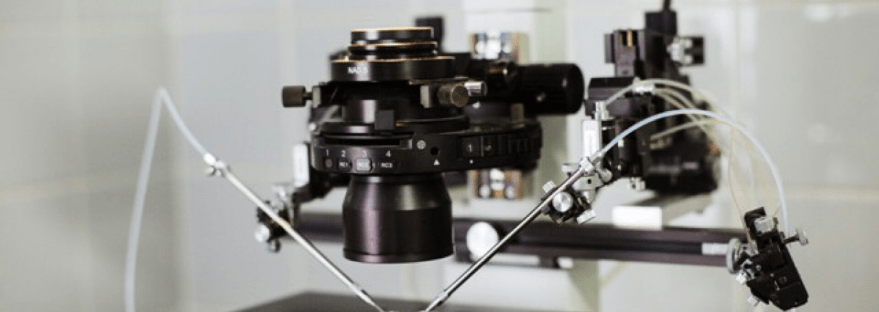
Intracytoplasmic sperm injection (ICSI).
A single healthy sperm is injected directly into a mature egg. ICSI is often used when there is poor semen quality or quantity, or if fertilization attempts during prior IVF cycles failed.
Assisted hatching. This technique assists the implantation of the embryo into the lining of the uterus by opening the outer covering of the embryo (hatching).
Donor eggs or sperm. Most ART is done using the woman’s own eggs and her partner’s sperm. However, if there are severe problems with either the eggs or sperm, you may choose to use eggs, sperm or embryos from a known or anonymous donor.
Gestational carrier. Women who don’t have a functional uterus or for whom pregnancy poses a serious health risk might choose IVF using a gestational carrier. In this case, the couple’s embryo is placed in the uterus of the carrier for pregnancy.
Inna Moroz, MD

 Infertility Care | IVF | Surrogacy